Retirement Planning • Saving • Contributions
What happens if you stop saving for retirement for a few years?
How a temporary pause in retirement contributions can affect long-term savings—and what to consider before making the change
3 Key Takeaways
1
Missing contributions early has a bigger long-term impact. Money invested in your 20s and 30s has more time to grow and compound.
2
Reducing contributions is often better than stopping completely. Continuing to save, especially enough to receive your full employer match, helps limit the long-term impact.
3
Have a plan to restart contributions. A temporary reduction can easily become permanent without a clear timeline for increasing savings again.
See what a contribution change could do to your retirement plan.
Use WealthTrace to compare different retirement contribution levels and see how they affect your long-term balances and probability of success.
Start Free Trial Test contribution scenarios in minutes. When household expenses rise, retirement contributions are often an easy place to cut because the goal still feels far away. NFP’s 2026 U.S. Retirement Trend Report found that 46% of employees are deprioritizing or unable to save for retirement as expenses such as housing, car payments, and healthcare take priority.
Sometimes reducing contributions is necessary. But before making that change, it is worth understanding the potential long-term cost, especially for younger workers, whose contributions have more time to grow.

Why Missing a Few Years Can Matter So Much
The biggest advantage younger investors have is time. Money invested in your 20s or 30s has 30 or 40 years to grow before retirement. During that time, you are not just earning returns on your original contributions. You are also earning returns on prior investment gains over time, which is the compounding effect that makes long-term investing so powerful.
That means skipping a contribution at age 25 has a much larger long-term impact than skipping the same contribution later in your career.
Consider a hypothetical worker who contributes $7,000 per year toward retirement and earns an average annual return of 7%. If that worker stopped contributing for three years beginning at age 25, those missed contributions would amount to roughly $337,000 less in their portfolio by age 67. If the same three-year pause began at age 35, the difference would be closer to $171,000. If it began at age 45, the difference would be about $87,000.
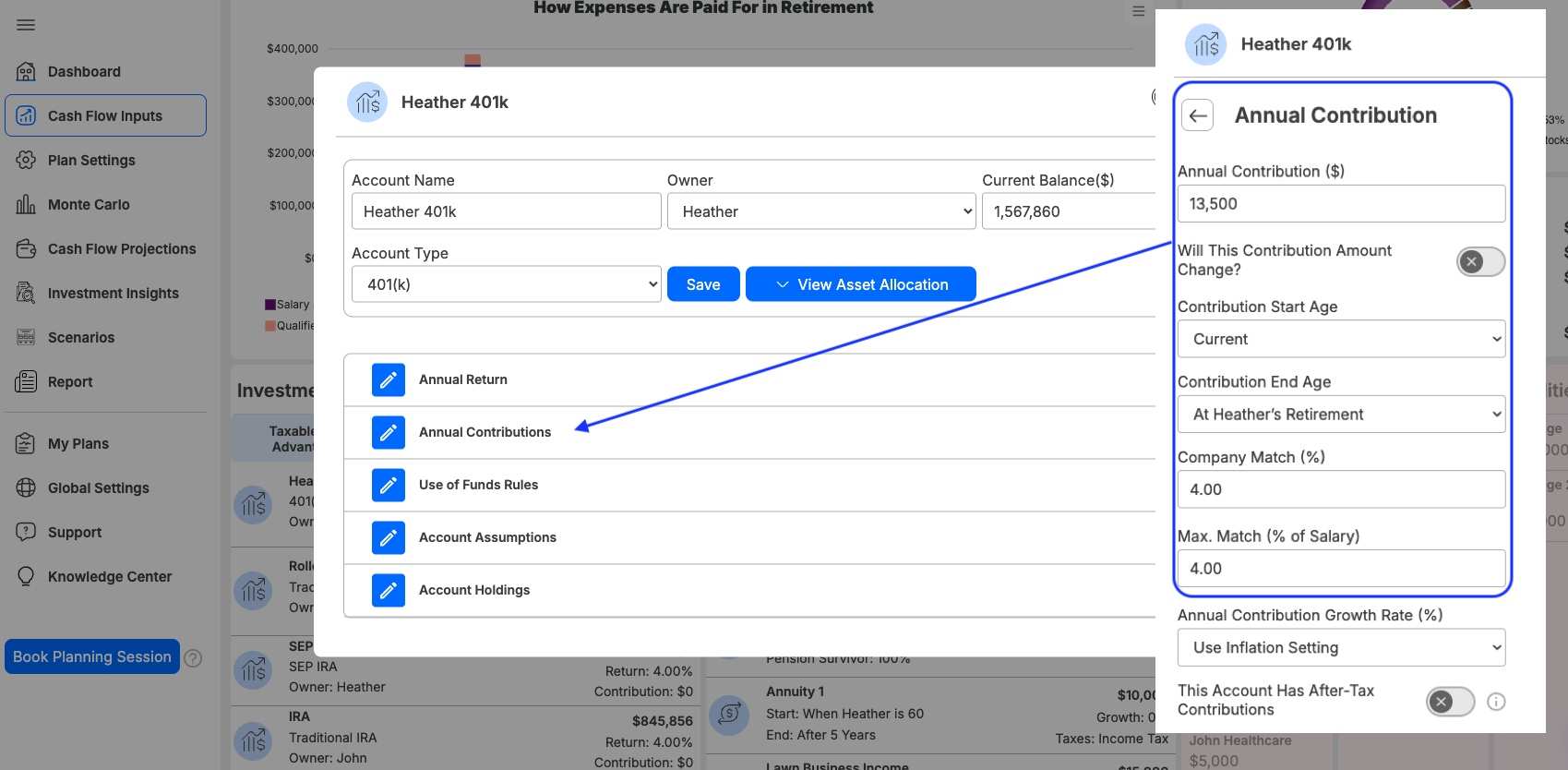
WealthTrace Planning Tip: To test a lower contribution amount, update the annual contribution in the investment account settings and assumptions, then compare the results with your current plan.
Reducing Contributions Is Often Better Than Stopping Completely
Retirement saving does not have to be an all-or-nothing decision. If your budget cannot support your current contribution rate, lowering it temporarily is often a better option than stopping altogether.
Suppose someone earns $70,000 per year and normally contributes 10% of their salary, or $7,000 annually, to a workplace retirement plan. Their expenses increase, so they reduce their contribution to 3%, or $2,100 per year, for three years. That means they contribute $4,900 less each year during that period.
Using the same hypothetical 7% annual return, reducing contributions for three years beginning at age 25 could result in roughly $236,000 less by age 67 than maintaining the original contribution level. That is still a meaningful difference, but continuing to contribute something preserves at least part of the long-term benefit.
There is another important reason not to stop completely: the employer match. If your employer matches part of your 401(k) contribution, lowering your contribution below the amount required for the full match means giving up additional compensation.
Before making a change, consider whether you can at least contribute enough to receive the full employer match. If your employer matches the first 4% of pay, for example, dropping from 10% to 4% reduces the strain on your budget while allowing you to keep receiving the entire match.
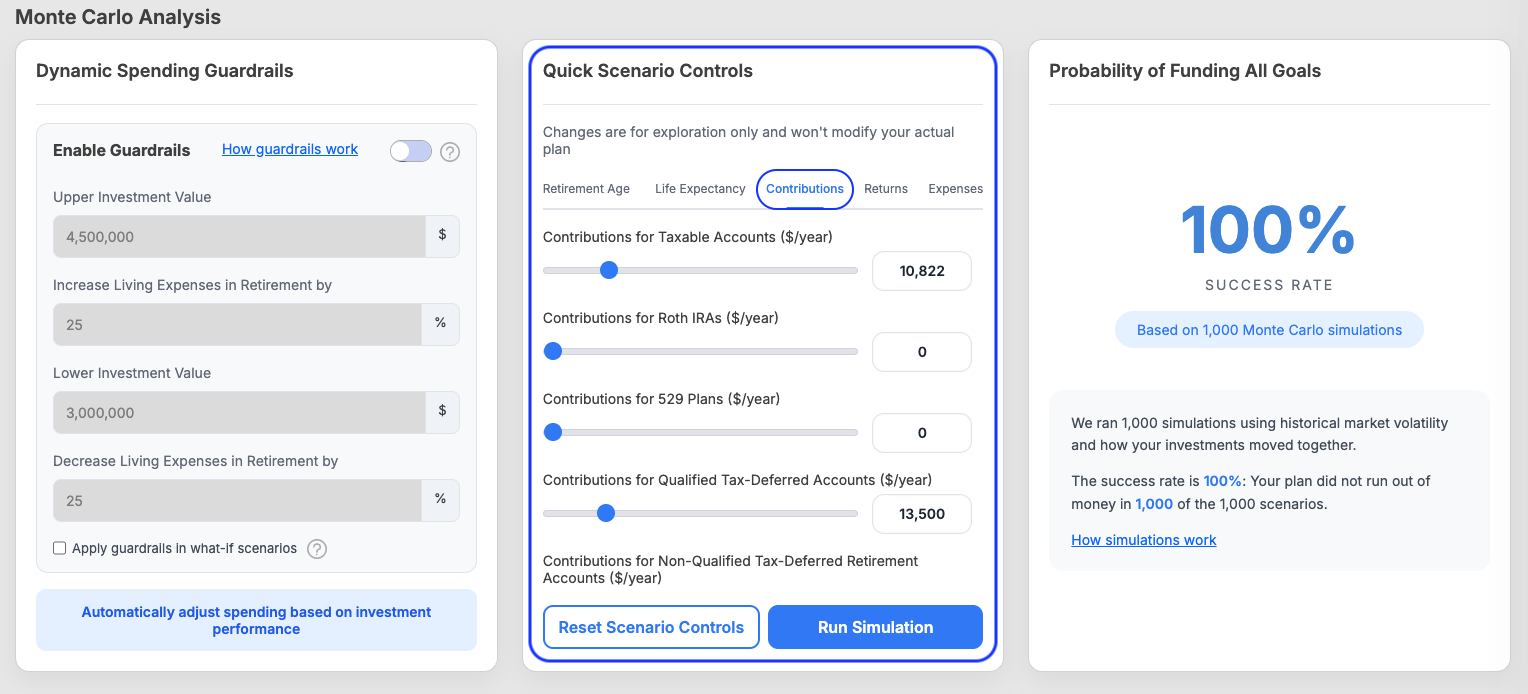
WealthTrace Planning Tip: On the Monte Carlo screen, use the Quick Scenario controls to increase or decrease your annual contribution. This lets you quickly see how different savings levels affect your probability of success and overall retirement outlook. Look for Room in the Budget First
There are situations where retirement savings should take a back seat temporarily. Essential expenses and high-interest debt often need to come first. But if the problem is more about a stretched monthly budget than an actual financial emergency, it makes sense to look for other places to cut before reducing long-term savings.
Temporary adjustments might include:
- Delaying a major vacation or choosing a less expensive trip for a year or two
- Eating out less often and reducing takeout or delivery spending
- Reviewing subscriptions and memberships you rarely use
- Postponing a vehicle upgrade or other large discretionary purchase
- Shopping around for better rates on insurance, internet, or cell phone service
- Directing part of a raise or bonus toward retirement rather than immediately increasing spending
The point is not to eliminate everything enjoyable from your life. In many cases, a few moderate changes can be enough to keep retirement contributions going without creating too much pressure on the household budget.
It also helps to distinguish between expenses that are temporary and expenses that are permanent. Childcare costs, for example, can be extremely high for several years but eventually decline. If you know a major expense will end at a specific point, you can plan for a temporary reduction rather than stopping indefinitely.
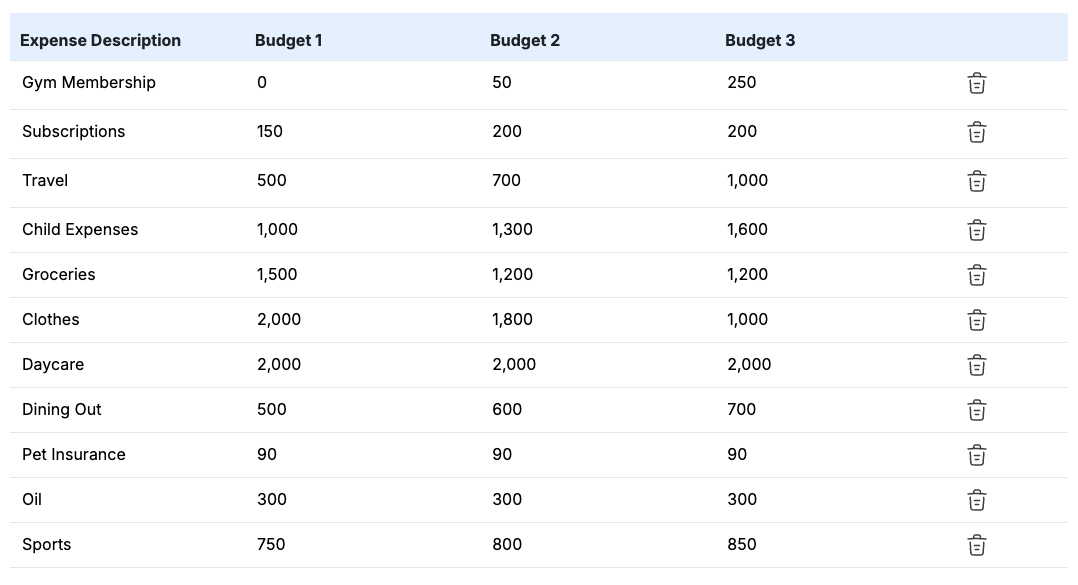
WealthTrace Planning Tip: Use the budget worksheet in the Living Expenses in Retirement entry to review your spending by category and identify areas where you could cut back temporarily. Seeing those expenses laid out in one place can help you decide whether reducing retirement contributions is really necessary.
Run the Numbers Before You Make the Change
One of the most useful things you can do before reducing contributions is model the impact on your overall retirement plan.
Rather than focusing only on the extra $200 or $400 in your monthly paycheck, compare two or more scenarios. In one, you continue contributing at your current level. In another, you reduce contributions for several years. You might also create a third scenario where you stop contributions temporarily but save more later to catch up.
Then look at how those decisions affect the bigger picture. Consider questions such as:
- Does your projected retirement age change?
- Does your probability of success decline?
- How much would you need to save later to catch up?
- Would you need to reduce future retirement spending?
Compare your contribution options before making a change.
WealthTrace lets you test lower contributions, contribution pauses, catch-up savings, retirement age changes, and their impact on your overall plan.
Start Free Trial See the long-term impact. The Bottom Line
Reducing retirement contributions is sometimes necessary, but the long-term cost is often much larger than the amount you stop saving today, especially when you are young.
Before stopping completely, consider cutting other expenses, lowering your contribution temporarily, or at least contributing enough to receive your full employer match. If you do reduce contributions, have a clear plan for when you will increase them again.
Most importantly, run the numbers first so you understand how the change could affect your retirement plan.