Retirement Planning • Sequence Risk • Market Timing
Why Retiring in the Wrong Year Can Change Your Entire Retirement
How market timing at the start of retirement, not just your savings, determines whether your money lasts
3 Key Takeaways
1
Retirement risk is driven more by when you retire than by your average investment return.
2
Early market declines combined with withdrawals can permanently damage a portfolio — even if markets later recover.
3
A retirement plan should model multiple future scenarios, not just a single projection.
Want to test how a market crash right after retirement would affect your plan?
Run a retirement scenario in WealthTrace and see how early market declines, withdrawals, and different spending assumptions may affect your long-term probability of success.
Start Your Free Trial
Explore retirement scenarios.
Most people think retirement success depends on how much money they saved or what return their portfolio earns.
Those things matter — but they are not the factor that most often determines whether a retirement plan
succeeds or fails.
Instead, the biggest risk many retirees face is timing.
Two households can retire with identical portfolios, spend the same amount, and earn the same long-term
average market return
— yet one runs out of money and the other never comes close.
The difference is something called sequence of returns risk. And it explains why retiring in the wrong year can quietly change your entire financial future.
Sequence of returns risk is the danger that the timing of market gains and losses — not just the average return — affects how long your retirement savings last. Losses early in retirement, when you’re taking withdrawals, can permanently reduce your portfolio and increase the chance of running out of money.

Test what happens if a bear market hits right when you retire.
The Problem Isn’t Market Crashes — It’s Market Crashes Early
During your working years,
market downturns
are uncomfortable but not catastrophic. You are still contributing to investments, buying shares at lower prices, and you have time for recovery.
Retirement changes one critical variable:
You stop contributing — and start withdrawing.
Now the order of market returns suddenly matters more than the average return.
Imagine two retirees:
Both retire with $1,200,000
Both withdraw $60,000 per year
Both earn an identical 6.5% average return over 25 years
But one retires right before a bear market, and the other retires after one.
The first retiree begins withdrawals while the portfolio is declining. They are forced to sell investments at depressed prices to fund living expenses. Those shares never get a chance to recover.
The second retiree experiences strong early returns. Withdrawals come from a growing portfolio.
The long-term averages are identical — but the outcomes are completely different.
This is sequence risk: losses early in retirement do far more damage than losses later.
WealthTrace Planning Tip: You can model a bear market starting right when you retire — either by selecting a past recession or creating your own scenario — to see how an untimely downturn affects your probability of success.
Why Withdrawals Make Market Declines Dangerous
When you are saving, volatility works in your favor over time. When you are
withdrawing,
volatility works against you.
Here’s why:
A portfolio that drops 20% needs a 25% gain to recover. But if withdrawals are happening during the decline, the portfolio is not just recovering — it is recovering from a smaller base.
Example:
Year 1: Market falls 20%
Year 1 withdrawal: $60,000
Portfolio damage: double impact
The retiree didn’t just experience a market loss. They permanently removed assets that would have participated in the recovery.
This creates a compounding problem. The portfolio now has:
- fewer shares
- less growth capacity
- higher withdrawal pressure
This is why some retirees panic years later even when markets are strong. The damage already happened early, and they don’t realize it.
Why the 4% Rule Doesn’t Always Protect You
You may have heard that withdrawing 4% annually is considered “safe.”
The important nuance is this:
The 4% rule was never a guarantee. It was a probability based on historical periods. And historically, most failures occurred when retirees began withdrawals immediately before poor early market performance — especially periods with both inflation and market declines.
In other words, the rule doesn’t fail because the average return is too low.
It fails because the order of returns is unfavorable.
This is also why two people using identical withdrawal rates can experience completely different retirements.
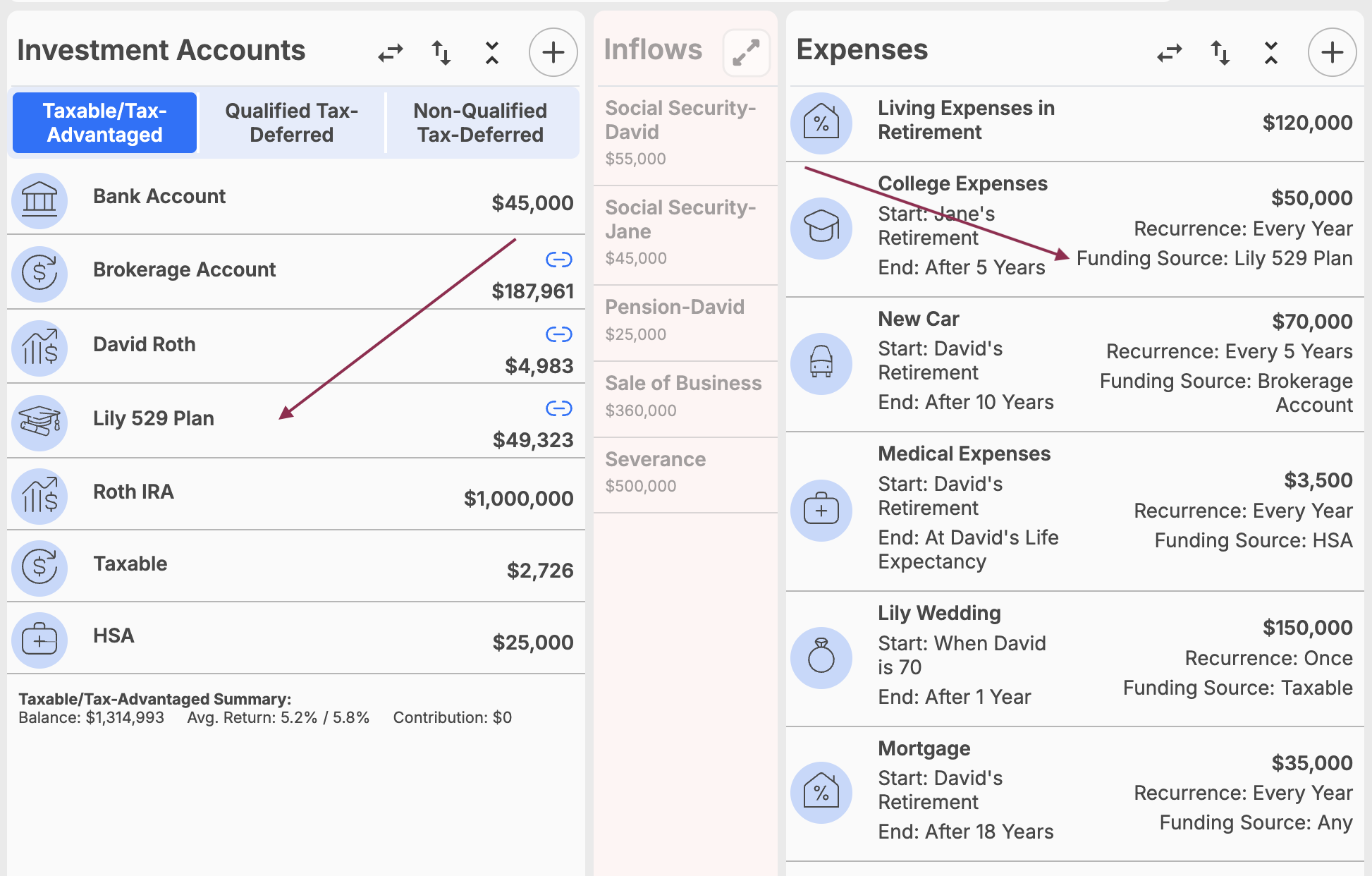
WealthTrace Planning Tip: You can experiment with your plan by increasing or decreasing spending, adjusting expected investment returns, and choosing which accounts or investments fund your expenses. Small changes like these can significantly affect your retirement outcome and help you understand how flexible your plan really is.
How Retirees Actually Manage This Risk
The good news is sequence risk is manageable once you understand it.
Successful retirement plans typically include adjustments such as:
1) Flexible withdrawals
Spending slightly less after poor market years significantly improves long-term outcomes.
2) Cash or short-term reserves
A buffer allows retirees to avoid selling investments during downturns.
3) Dynamic planning
Instead of assuming one future, the plan tests many possible market conditions.
This last point is the most important. A single projection (one straight-line chart) is not a real retirement plan. Real life never follows one path.
A robust plan evaluates many possible market sequences and shows the probability of success rather than a single answer.
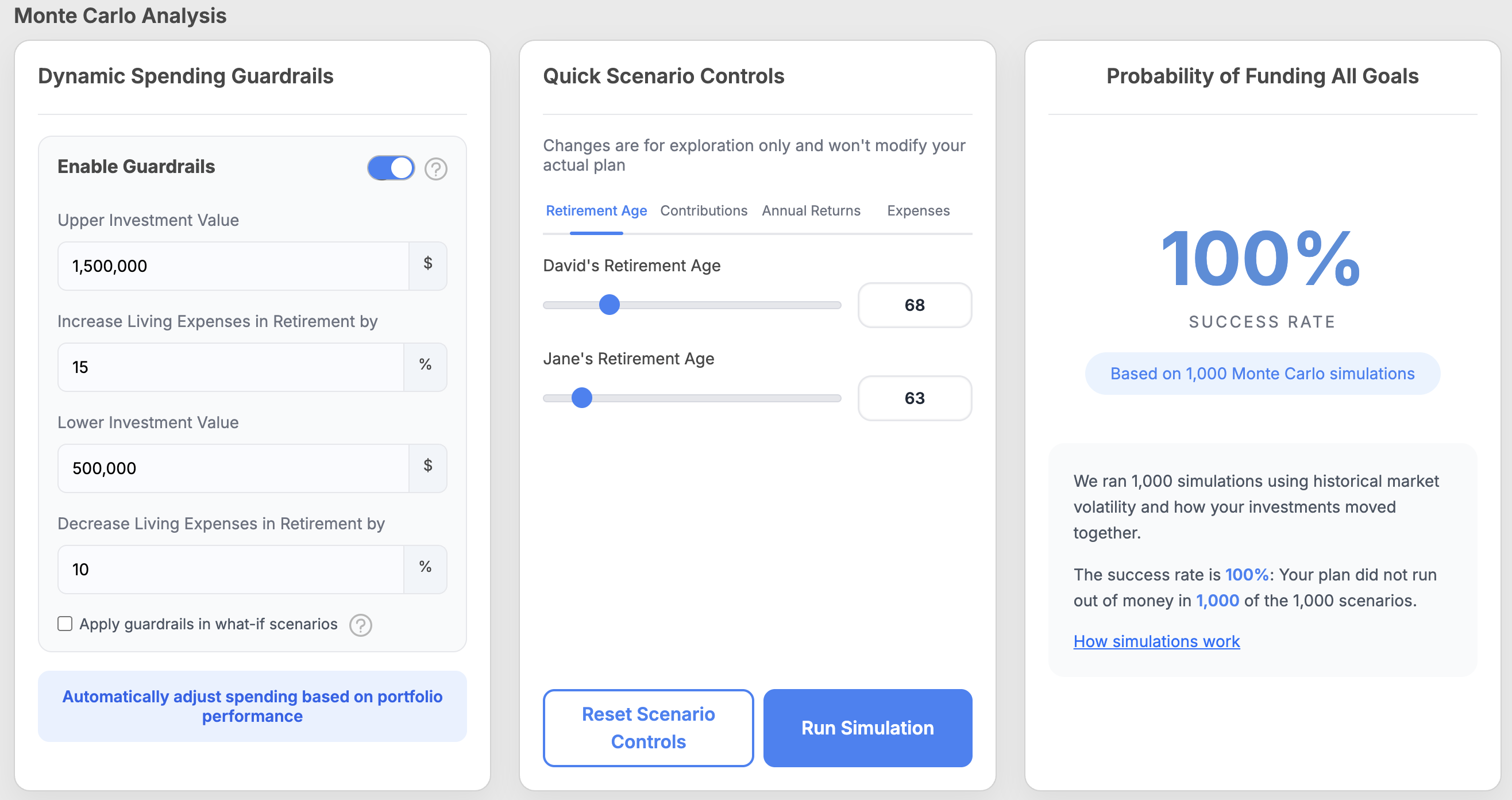
WealthTrace Planning Tip: WealthTrace’s Monte Carlo analysis runs 1,000 trials where investment returns vary each year, calculating your probability of success across many possible market paths. Spending guardrails adjust withdrawals to better reflect real-life behavior, and you can also run quick scenarios to stress-test your plan and see how resilient it is under different conditions.
See how resilient your retirement plan really is.
WealthTrace helps you stress-test your retirement against bear markets, changing returns, spending adjustments, and multiple future scenarios so you can plan with more confidence.
Start Your Free Trial
Run your retirement scenarios instantly.
Summary
Retirement planning isn’t just about how much you save or the return you expect to earn. What matters just as much is how your portfolio behaves when real life happens. Many retirees assume the biggest threat is a permanent market crash, but the more common danger is beginning withdrawals during a poor market environment and unintentionally locking in losses early.
Two people can retire with the same savings, follow the same withdrawal rate, and even experience the same long-term market performance, yet end up with very different outcomes simply because of timing. For that reason, modern retirement planning focuses less on predicting the market and more on preparing for multiple possible futures.
The real question isn’t only, “What will happen?” but rather, “What happens if things don’t go as planned?” When your plan can answer that, retirement becomes far less about guesswork and much more about confidence.