Retirement Planning • Medicare • Taxes
Retiring keeps getting pricier
Even when your income hasn’t actually changed
3 Key Takeaways
1
A Social Security increase does not always mean a higher monthly deposit because Medicare premiums are often deducted directly from the payment.
2
Medicare premiums are based on income from two years earlier, so past financial decisions can affect your costs today.
3
Certain events — like Roth conversions, capital gains, or inherited IRA withdrawals — can create taxable “phantom income” that raises taxes and healthcare costs even if your spending didn’t change.
Want to see why your retirement income feels tighter than expected?
Run a retirement scenario in WealthTrace to model Social Security, Medicare premiums, taxes, Roth conversions, and other income events that can quietly reduce your take-home cash flow.
Start Free Trial
Explore your retirement income picture.
Many retirees expected this year to feel financially easier.
Social Security benefits increased, the markets have been relatively steady, and major saving years are behind them.
Yet a common reaction we hear is this:
“My income went up… but I don’t feel like I have more money.”
Often nothing is wrong with the retirement plan. The portfolio didn’t collapse. Spending didn’t spiral.
Instead, a set of lesser-known rules, involving Medicare, taxes, and the timing of income, can quietly reduce take-home retirement income.
The confusing part is that these effects usually appear years after the financial decision that caused them. Below are three of the most common reasons retirement can suddenly feel more expensive.

1) The Social Security Increase That Doesn’t Increase Your Deposit
Social Security benefits are adjusted each year for inflation. Naturally, many retirees assume the increase will show up as a larger monthly deposit.
But Medicare premiums are usually deducted directly from Social Security payments before the money ever reaches your bank account.
When Medicare premiums rise, part — and sometimes most — of a cost-of-living increase can be absorbed immediately.
The result:
The benefit increased
The payment barely changed
From a planning perspective, this creates a disconnect. Retirees may believe their income improved, yet their spending power stayed the same.
This often becomes the first sign that other factors are influencing retirement income behind the scenes.
WealthTrace Planning Tip: You can adjust the COLA (cost-of-living adjustment) rate in your plan to model how Social Security benefits grow over time. You can choose a static rate or select to vary rates over time.
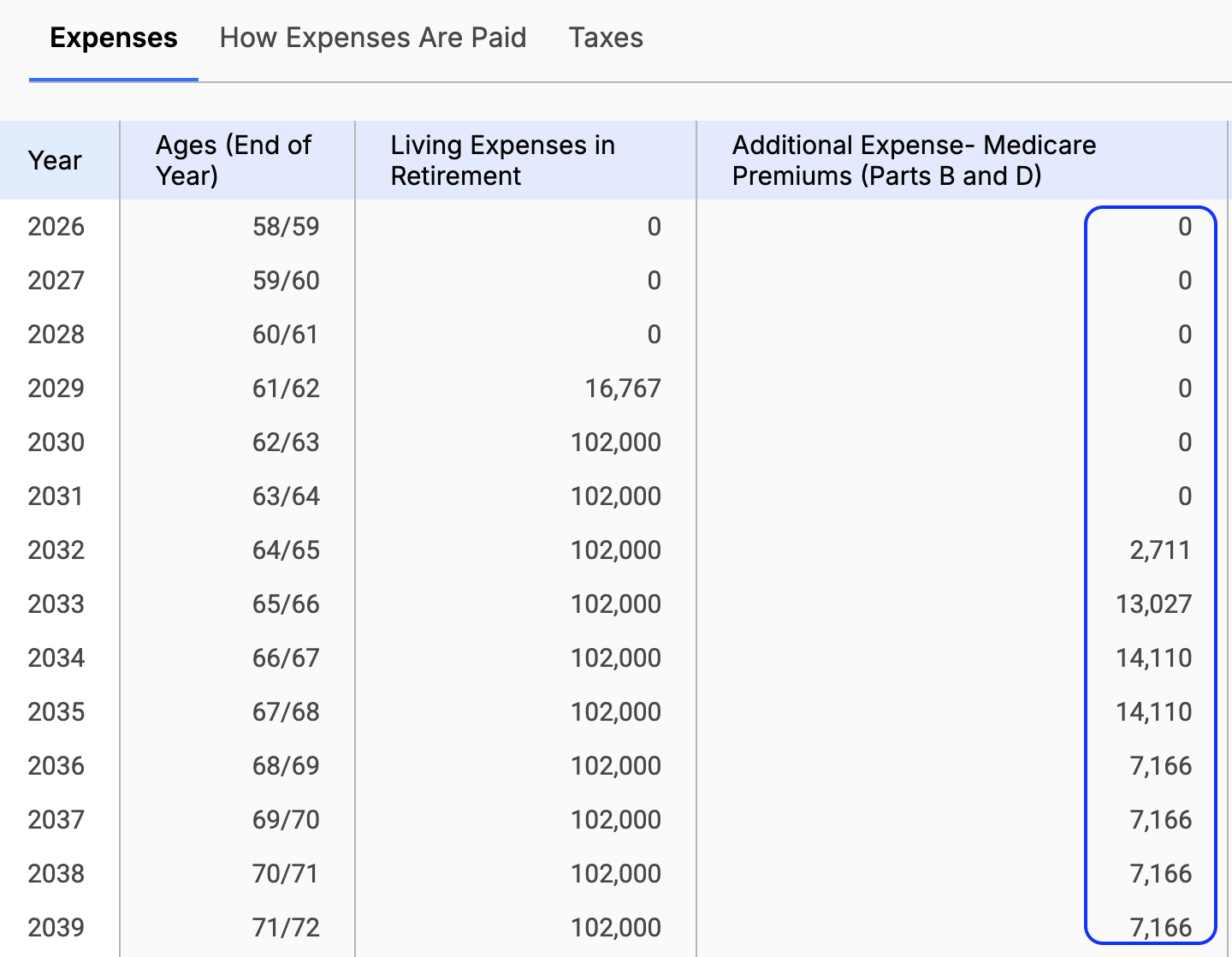
WealthTrace Planning Tip: WealthTrace will automatically calculate Medicare premiums and display them as a separate line item, making it easier to see how increases in benefits may be offset by rising healthcare costs.
2) A Medicare Rule Most People Learn After It Happens
Medicare premiums are not identical for everyone. They are determined partly by your income from two years earlier through a rule called IRMAA (Income-Related Monthly Adjustment Amount).
This timing is what surprises people.
A financial decision made years ago — even one that seemed reasonable — can increase Medicare premiums today.
Common triggers include:
- Selling appreciated investments
- Large capital gains
- Roth conversions
- A business or property sale
- Withdrawals from inherited retirement accounts
Many households don’t connect these events to Medicare because there is a delay between the action and the cost.
This is a very typical experience. The tax return changes long before retirees expect their healthcare costs to.
WealthTrace Planning Tip: Use scenario planning to model large financial events (like Roth conversions or asset sales) before executing them. Seeing the projected IRMAA impact two years ahead can help you spread income across years and avoid unnecessary premium increases.
3) The Real Culprit: Income That Doesn’t Feel Like Income
A large number of retirement income surprises come from what planners often call phantom income — taxable income that doesn’t actually increase day-to-day lifestyle spending.
Examples include:
- Converting pre-tax accounts to Roth accounts
- Required withdrawals from inherited IRAs
- Selling a rental property
- Portfolio rebalancing with gains
These decisions may be financially reasonable and even beneficial long-term. However, they still increase the income reported on a tax return.
Medicare premiums and some tax calculations are based on reported income, not cash flow.
Medicare cares about what appears on your tax return, not how much money you actually spent.
WealthTrace Planning Tip: Track all sources of taxable income in your plan. This helps you spot “phantom income” that can increase taxes or Medicare costs, even in years when your actual spending hasn’t changed.
Why This Often Gets Blamed on the Wrong Thing
When retirement income becomes tighter, many people assume:
- their investments underperformed, or
- they withdrew too much money.
In reality, the issue is often timing.
Income that appears in certain years can create a chain reaction — higher taxes, higher Medicare premiums, and smaller net Social Security payments — even if overall wealth hasn’t changed.
A plan may still be sustainable, but it no longer feels predictable.
See how taxes, Medicare, and income timing affect your retirement plan.
WealthTrace helps you model Social Security, Medicare premiums, Roth conversions, capital gains, inherited IRA withdrawals, and other income events so you can understand what really affects your take-home retirement income.
Start Free Trial
Stress-test your retirement income plan.
The Bottom Line
Retirement rarely becomes more expensive because of a single event. More often, it’s the result of several delayed effects happening at the same time.
A Social Security adjustment may occur, but rising Medicare premiums can offset much of it. A financial decision made years earlier may suddenly affect healthcare costs today. And taxable income can appear on a return without actually improving day-to-day cash flow.
When this happens, retirees often assume their plan failed or their investments underperformed. In many cases, neither is true.
The challenge is not necessarily how much income you have, but when that income is recognized and how it interacts with taxes and Medicare rules.
A strong retirement plan doesn’t just focus on total wealth — it accounts for timing, taxes, and healthcare costs together. Regularly revisiting your plan with updated assumptions can help keep outcomes predictable and aligned with your goals.