3 Key Takeaways
Social Security benefits are increasing in 2027. A 3.6% cost-of-living adjustment (COLA) will raise monthly payments, while new earnings limits and taxable wage thresholds will also take effect.
Your claiming age has a lasting impact on retirement income. Claiming at 62 provides benefits sooner, while delaying until 70 results in significantly larger monthly payments for life.
The best claiming strategy depends on your overall retirement plan. Life expectancy, taxes, investment withdrawals, and other income sources all influence when you should start collecting benefits.
Social Security in 2027: What's Changing and When Should You Claim?
Social Security is an important source of retirement income, and deciding when to claim is one of the biggest financial decisions you'll make. With new benefit adjustments taking effect in 2027, now is a good time to review your options.
While annual benefit increases provide additional income, your claiming age has a much greater impact on your long-term retirement outlook. Understanding the trade-offs between claiming early and delaying benefits helps you make a more informed decision.
What's Changing for Social Security in 2027?
The Social Security Administration has announced a 3.6% cost-of-living adjustment (COLA) for 2027, increasing benefits for approximately 76 million Americans. The average retired worker will receive about $75 more per month, bringing the estimated average monthly benefit to $2,170.
Several other important changes take effect in January:
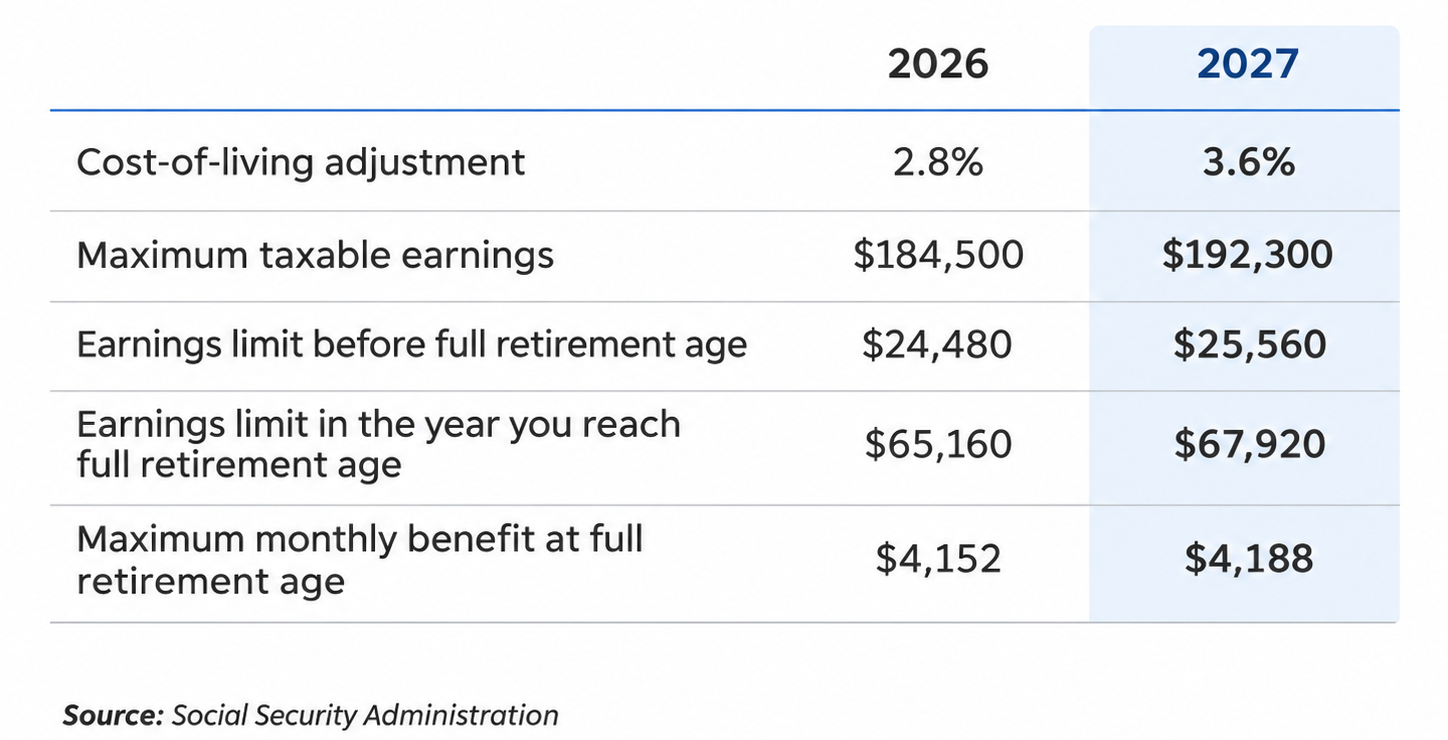
For individuals who continue working while collecting benefits before full retirement age, the earnings limits are especially important. In 2027, Social Security withholds $1 in benefits for every $2 earned above $25,560. Different rules apply during the year you reach full retirement age, and the earnings test ends once you reach that age. Benefits withheld under the earnings test are accounted for through a benefit recalculation at full retirement age.
Should You Claim Social Security at 62, 67, or 70?
You can begin collecting Social Security retirement benefits as early as age 62 or delay until age 70. Each option has advantages, but the differences in monthly income are significant.
Claiming Early at Age 62
Claiming at 62 gives you access to benefits sooner, reducing your immediate reliance on retirement savings. However, starting before full retirement age permanently reduces your monthly benefit.
For someone whose full retirement age is 67, claiming at 62 results in a 30% reduction compared with their full retirement benefit. That reduction generally remains in place throughout retirement, although future COLAs still apply.
Early claiming makes sense in certain situations, particularly when income is needed immediately or life expectancy is shorter. The trade-off is receiving smaller monthly payments for the remainder of retirement.
Claiming at Full Retirement Age
Full retirement age is between 66 and 67, depending on your birth year. For anyone born in 1960 or later, it is 67.
Claiming at full retirement age provides 100% of your calculated retirement benefit, without the reductions associated with early claiming. You can also continue working without having benefits withheld under the retirement earnings test.
For retirees with sufficient savings and other income sources, waiting until full retirement age provides a balance between receiving benefits sooner and securing a larger monthly payment.
Delaying Until Age 70
Delaying Social Security beyond full retirement age increases your monthly benefit through delayed retirement credits. For individuals with a full retirement age of 67, waiting until 70 increases the benefit by 24% compared with claiming at 67.
The increase is permanent, creating a larger guaranteed income stream throughout retirement. Delaying also strengthens potential survivor benefits for married couples when the higher earner's benefit determines the surviving spouse's payment.
However, waiting requires covering living expenses from other income or investments in the meantime. Those additional withdrawals are an important consideration when evaluating the long-term benefits of delaying.
How Much Difference Does Your Claiming Age Make?
Consider someone with a full retirement benefit of $2,500 per month at age 67. Their monthly benefit changes significantly depending on when they begin collecting Social Security.
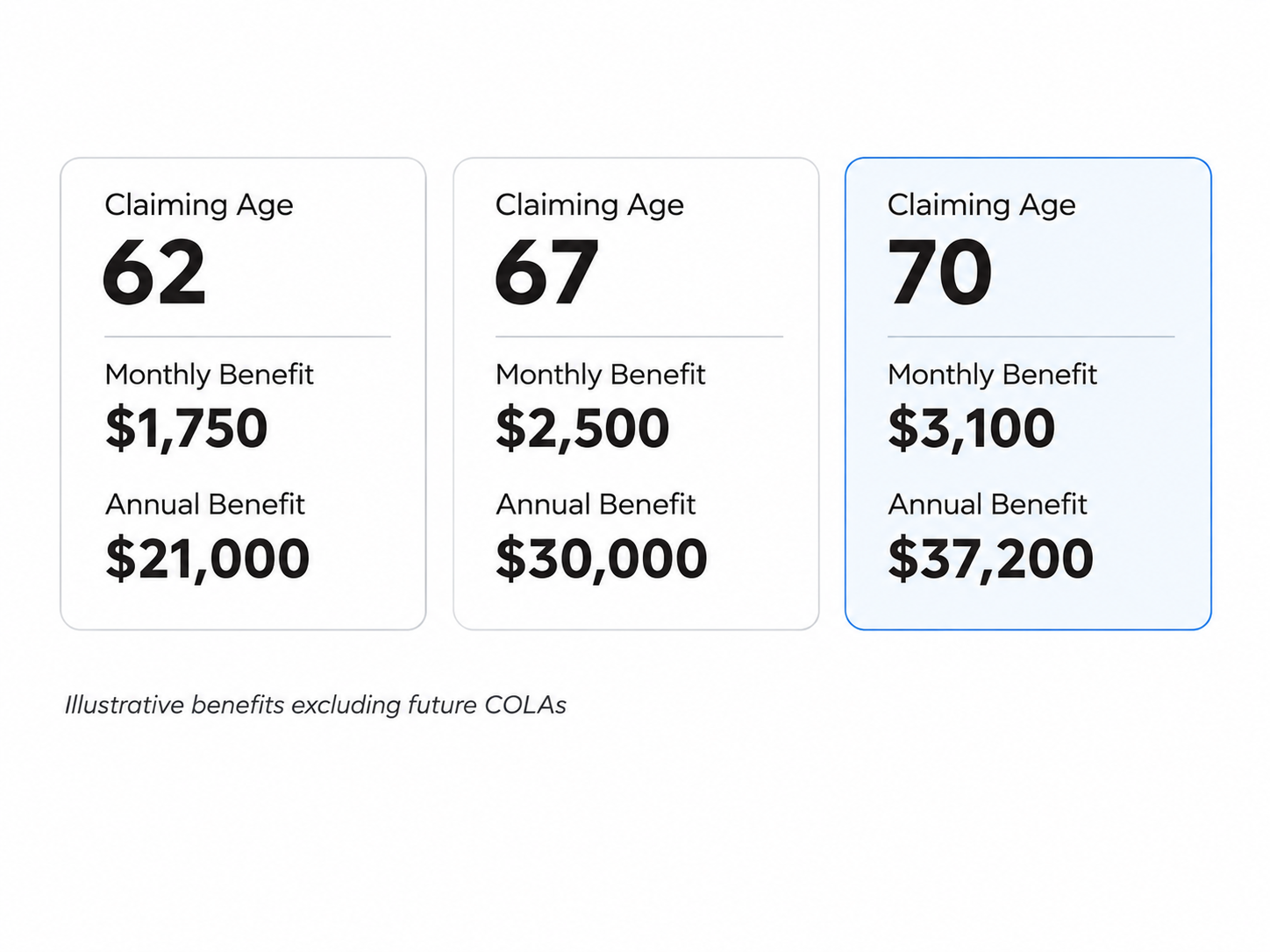
Waiting until age 70 provides $1,350 more per month than claiming at 62. That's an additional $16,200 annually for life.
But the larger monthly benefit doesn't automatically make delaying the best choice. Someone claiming at 62 receives eight years of payments before someone waiting until 70 collects their first check. The decision depends on how long benefits are collected and what happens to retirement savings during those years.
To see how claiming age affects a complete retirement plan, let's look at a separate example using WealthTrace. Alex is a hypothetical retiree who retires at age 60 with approximately $1.14 million in investments and $65,000 in annual living expenses.
Using WealthTrace, we compared three scenarios in which Alex begins collecting Social Security at ages 62, 67, and 70, keeping his other financial assumptions consistent.
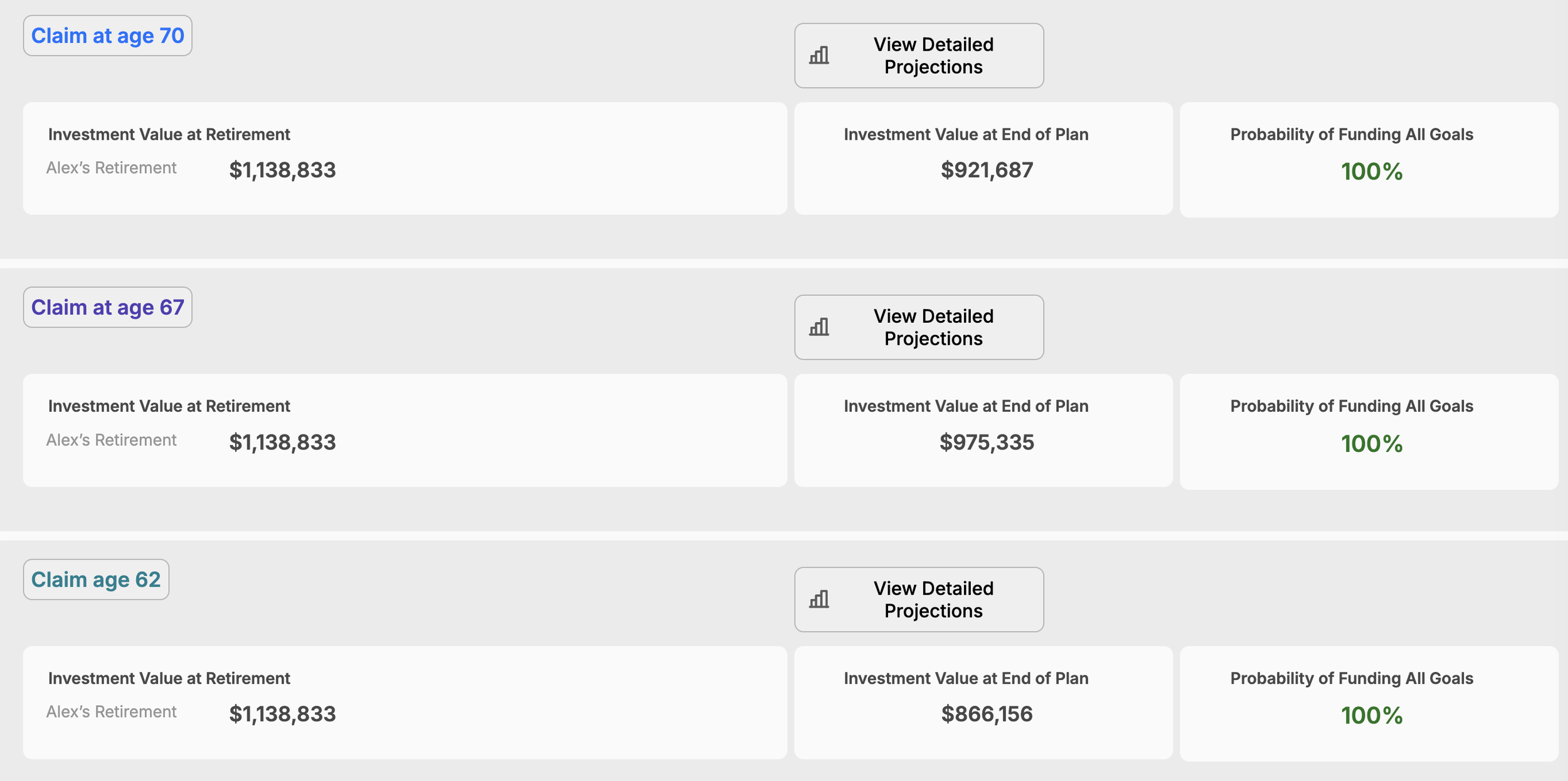
In this example, claiming at age 67 produces the highest projected investment balance at age 95: $975,335. That's approximately $109,000 more than claiming at 62 and $54,000 more than waiting until 70.
All three scenarios have a 100% probability of funding Alex's retirement goals, demonstrating that the decision isn't simply about whether he'll have enough money. It's also about how his claiming strategy affects investment withdrawals and the amount of wealth he preserves throughout retirement.
WealthTrace Planning Tip: Test different Social Security claiming ages in your retirement plan to see how they affect investment withdrawals, projected ending balances, and your probability of retirement success. Keep your other financial assumptions consistent to make meaningful comparisons.
What Else Should Influence Your Decision?
Social Security claiming strategies shouldn't be evaluated in isolation. Several factors influence which approach produces the strongest overall retirement outcome.
Life expectancy: Delaying benefits generally becomes more advantageous the longer you live. Those expecting a shorter retirement have less time to recover the benefits they give up by waiting.
Marital status: Married couples should consider both spouses' claiming ages and potential survivor benefits. Delaying the higher earner's benefit often provides additional financial protection for the surviving spouse.
Taxes: Depending on your combined income, up to 85% of Social Security benefits are subject to federal income tax. The timing of benefits, retirement account withdrawals, and Roth conversions all influence your overall tax picture.
Investment withdrawals: Delaying Social Security often requires larger withdrawals from retirement accounts during the early years. Those withdrawals reduce invested assets and affect future growth.
Make sure your retirement plan is ready for 2027.
WealthTrace helps you review your retirement projections, evaluate Roth conversions, explore tax-saving strategies, and see how year-end financial decisions could impact your long-term retirement plan.
Make more informed decisions before the year ends.
How Claiming Age Affects Your Investment Balances
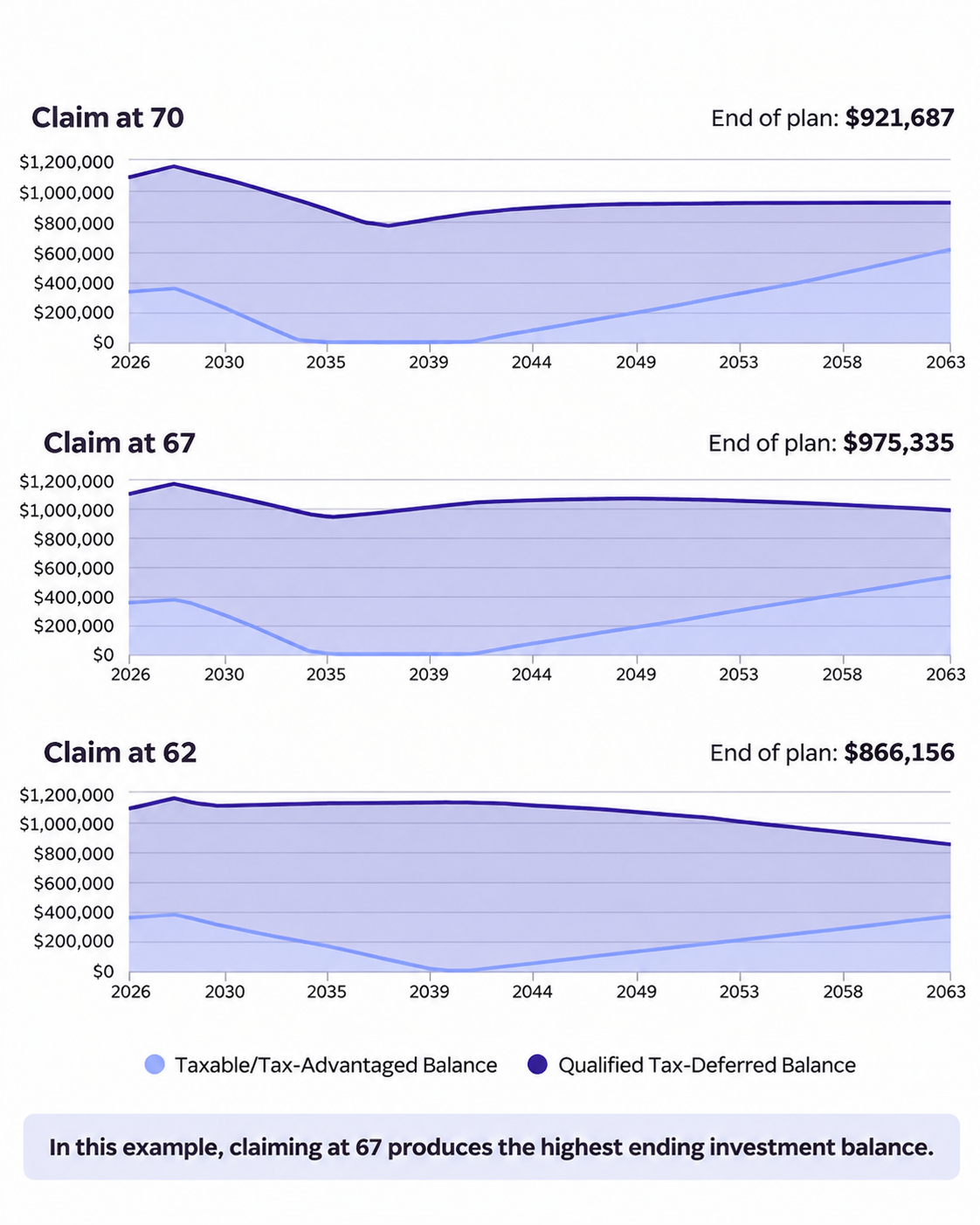
The investment projections also reveal how each claiming strategy affects Alex's savings over time. Claiming at 62 helps preserve his investments during the early years, while delaying until 70 results in a larger initial decline as he relies on his portfolio to cover expenses.
Once Social Security begins, the higher payments in the delayed-claiming scenarios reduce the need for investment withdrawals. These differences highlight why Social Security decisions should be evaluated as part of your overall retirement plan.
The Bottom Line
Social Security's 2027 increases provide additional income for retirees, but when you claim has a much greater impact on your long-term financial outlook. Claiming early provides income sooner, while delaying offers larger monthly benefits and greater protection against longevity risk.
The right claiming age depends on your retirement savings, life expectancy, taxes, and other income sources. With WealthTrace, you can compare different claiming strategies, see how they affect your investments, and make a more informed decision about your retirement income.
See how today's financial decisions impact your retirement.
Use WealthTrace to test Roth conversions, adjust your investment strategy, and explore how changes to your income, taxes, and spending affect your long-term retirement plan.